Cart
0
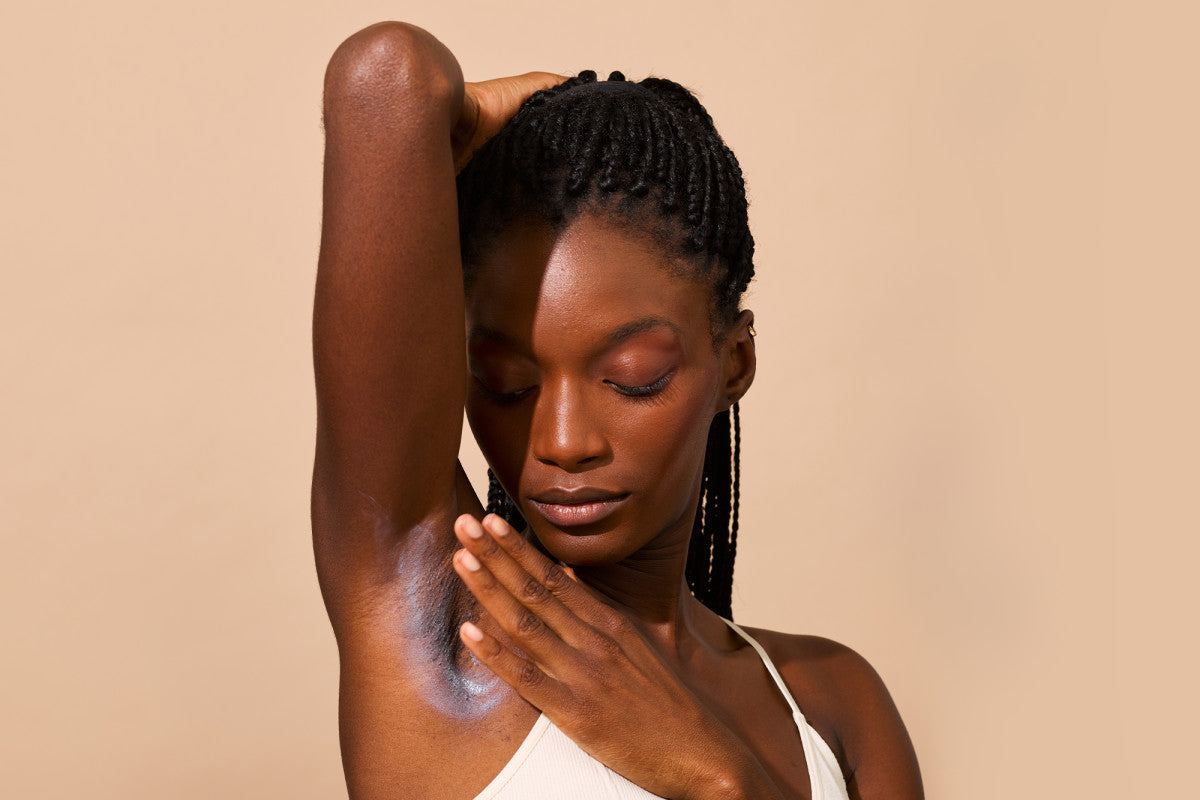
Dark underarms are common, but they are often misunderstood.
Uneven underarm tone is not automatically a sign of poor hygiene, and it cannot always be washed or scrubbed away. In many cases, the appearance develops because the skin has experienced repeated irritation, friction, inflammation, or injury.
For people with melanin-rich skin, these changes can be especially visible and persistent. That does not mean the skin is damaged beyond repair. It means the routine needs to address both the pigment and the processes contributing to it.
Why do underarms become darker?
Dark underarms may result from post-inflammatory hyperpigmentation, shaving irritation, friction, ingrown hairs, product reactions, accumulated dead skin cells, or certain medical conditions.
More than one factor can be present at the same time.
Before choosing a brightening product, it is important to consider why the skin may be changing. Treating discoloration without addressing ongoing irritation is like drying the floor while the faucet is still running.
1. Post-inflammatory hyperpigmentation
Post-inflammatory hyperpigmentation, commonly called PIH, occurs when the skin produces excess pigment following inflammation or injury.
The original irritation may be minor:
- Razor burn
- An ingrown hair
- A deodorant reaction
- A scratch
- A recurring bump
- Over-exfoliation
- Repeated rubbing
After the inflammation settles, a brown, gray-brown, or darker mark may remain.
PIH can affect anyone, but it is often more noticeable and longer-lasting in deeper skin tones because melanocytes—the cells that produce melanin—may respond more strongly to inflammation.
This is one reason aggressive underarm brightening can backfire. If a product burns, peels, or inflames the area, the irritation itself may contribute to more visible discoloration.
2. Shaving irritation
Shaving is one of the most common sources of repetitive underarm irritation.
Potential triggers include:
- A dull or contaminated razor
- Shaving without enough lubrication
- Pressing too hard
- Shaving the same area repeatedly
- Shaving against hair growth
- Applying fragranced or active products immediately afterward
Shaving may also make the area look darker because hair remains visible beneath the skin’s surface. This is sometimes called a “shadow,” and it is different from pigmentation within the skin.
If the darkness is primarily caused by visible hair beneath the surface, a topical brightening product may not completely eliminate it.
3. Ingrown hairs and razor bumps
An ingrown hair develops when a hair curves or grows back into the skin instead of emerging normally.
The body can respond with redness, swelling, tenderness, or a small bump. Once the bump resolves, it may leave a darker mark.
People with curly or tightly coiled hair may be more likely to experience ingrown hairs because the hair can more readily curve toward the skin.
Picking or squeezing the bumps increases inflammation and may make the resulting discoloration more persistent.
4. Friction
Underarms experience natural friction every time the arms move. Additional friction may come from:
- Tight sleeves
- Coarse fabrics
- Repetitive exercise
- Skin-to-skin rubbing
- Frequent dry shaving
- Scrubbing tools or rough exfoliating gloves
Over time, repeated friction can contribute to irritation, thickened texture, and uneven tone.
Reducing friction is therefore part of a brightening routine—not merely a comfort measure.
5. Sensitivity to deodorant or other products
A product does not need to cause a dramatic rash to be irritating. Low-level, repeated sensitivity may appear as:
- Itching
- Stinging
- Dryness
- Flaking
- Roughness
- Redness
- A gradual change in tone
Fragrance is a common source of cosmetic sensitivity, although any ingredient can cause a reaction in a susceptible person.
Applying multiple strong products to the same area may also disrupt the skin. For example, a person might use an exfoliating cleanser, acid toner, brightening serum, fragranced deodorant, and scrub—then assume the resulting irritation means the skin needs even more exfoliation.
When the underarms feel persistently uncomfortable, simplifying the routine is often the better first step.
6. Buildup and rough surface texture
Dead skin cells, deodorant residue, sweat, and fabric fibers can accumulate on the skin’s surface. This may make the area appear dull, rough, or temporarily darker.
Gentle cleansing and appropriate exfoliation can help, but buildup should not be confused with deeper pigmentation. If the color does not disappear after ordinary washing, scrubbing harder is unlikely to help.
7. Hormonal or medical factors
Not every case of dark underarms is cosmetic.
Acanthosis nigricans can cause dark, thickened, velvety patches, commonly around the underarms, neck, or groin. It is sometimes associated with insulin resistance, prediabetes, diabetes, hormonal conditions, or certain medications.
A sudden change, a velvety texture, or similar patches elsewhere on the body should be evaluated by a healthcare professional.
The purpose of mentioning this is not to create alarm. It is to recognize that skincare has limits. A serum can improve the appearance of ordinary uneven tone, but it cannot diagnose or treat an underlying medical condition.
Are dark underarms caused by poor hygiene?
Usually, no.
The underarms can appear darker even when they are washed regularly. Pigmentation occurs within the skin and cannot be removed like surface dirt.
In fact, attempting to “clean” discoloration with harsh soaps, lemon juice, abrasive scrubs, or repeated rubbing can inflame the area and make the problem more noticeable.
Good hygiene matters for removing sweat and residue, but underarm discoloration should be approached as a skin concern—not a cleanliness failure.
How to improve the appearance of dark underarms
A successful routine has two goals:
- Reduce the conditions that continue to trigger discoloration.
- Support the gradual fading of existing uneven tone.
Focusing only on the second goal may produce disappointing results.
Step 1: Identify sources of irritation
Pay attention to when the skin becomes itchy, tender, dry, or inflamed.
Ask yourself:
- Does my deodorant sting?
- Do I shave over dry skin?
- Is my razor dull?
- Am I exfoliating too often?
- Do my clothes rub this area?
- Am I picking at ingrown hairs?
- Do I apply acids directly after shaving?
- Did the discoloration begin after introducing a product?
A simple routine can make it easier to identify the source.
Step 2: Cleanse without stripping
Use a mild cleanser and your hands or a soft cloth. Rinse away product residue carefully and dry the area without vigorous rubbing.
Strong antibacterial cleansers are not necessary for everyone and may be too drying for daily use. The goal is to clean the skin while preserving comfort.
Step 3: Improve your shaving technique
If you shave:
- Soften the hair with warm water first.
- Apply a shaving cream, gel, or another suitable lubricant.
- Use a clean, sharp razor.
- Shave with the direction of hair growth when possible.
- Use light pressure.
- Limit repeated passes.
- Rinse and gently pat the skin dry.
- Avoid applying irritating actives immediately afterward.
Some people benefit from shaving less frequently or exploring other hair-removal methods. Every option has potential drawbacks, so the best choice depends on your skin and hair type.
Step 4: Introduce gentle brightening ingredients
Effective underarm brightening does not require bleaching the skin. The goal is to reduce the appearance of excess, uneven pigment while respecting the surrounding skin tone.
Niacinamide
Niacinamide can help improve the appearance of uneven pigmentation and support the skin barrier. It works differently from ingredients that directly inhibit the tyrosinase enzyme, making it useful in a balanced, multi-ingredient approach.
Kojic acid
Kojic acid helps address visible hyperpigmentation by interfering with a step involved in melanin production. It is commonly used in cosmetic brightening formulas.
Because the ingredient can be irritating for some people, formulation matters. Using more is not necessarily better.
Hydrating ingredients
Glycerin, panthenol, sodium hyaluronate, and soothing extracts help maintain hydration and comfort.
This is an important part of brightening. Well-hydrated skin is better equipped to tolerate a consistent routine, while inflamed skin may continue producing uneven pigment.
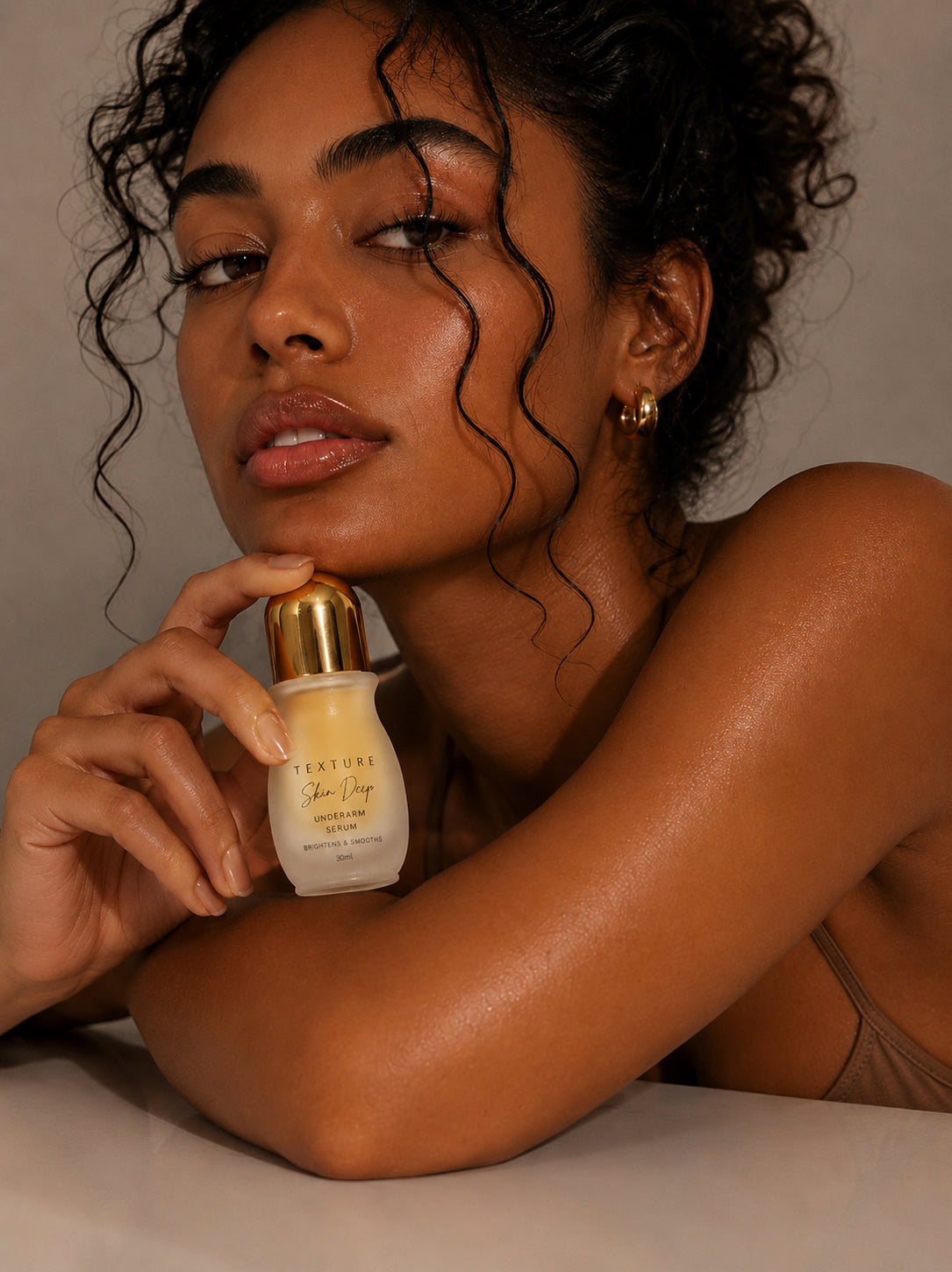
Texture’s Skin Deep Underarm Serum combines brightening ingredients with hydration and soothing care so the formula does not approach discoloration as an isolated problem.
Step 5: Exfoliate carefully
Exfoliation can improve roughness and help remove dead cells from the skin’s surface. However, underarm skin does not need to be exfoliated every day simply because discoloration is present.
Signs that you may be over-exfoliating include:
- Burning
- Persistent stinging
- Shiny or raw-looking skin
- Peeling
- Increased sensitivity
- New areas of discoloration
- A rash-like texture
Pause exfoliation if the skin becomes irritated. Do not use exfoliating products over cuts, open bumps, or freshly damaged skin.
Step 6: Protect the skin from repeated friction
Wear breathable, comfortable fabrics when possible. Make sure sleeves and seams are not repeatedly rubbing the same area.
During exercise, change out of damp, close-fitting clothing after your workout. Moisture and friction together can increase discomfort.
What not to use on dark underarms
Social media is filled with DIY brightening remedies, but natural does not mean non-irritating.
Be cautious with:
Lemon juice
Lemon juice is highly acidic and unpredictable when applied directly to the skin. It may cause burning, irritation, or a reaction that worsens discoloration.
Baking soda
Baking soda is alkaline and can interfere with the skin’s naturally acidic environment. It may leave the area dry and irritated.
Undiluted essential oils
Essential oils can cause irritation or allergic contact dermatitis, particularly when used directly on sensitive skin.
Harsh physical scrubs
Sugar, salt, rough gloves, brushes, and vigorous scrubbing can create friction and inflammation.
Unregulated bleaching products
Avoid products with unclear ingredient lists or promises of dramatic, immediate whitening. Products marketed for skin bleaching may contain inappropriate or undisclosed substances.
The safest goal is not to change your natural skin color. It is to help irritated, uneven skin return to a healthier-looking, more balanced state.
How long does it take to brighten dark underarms?
There is no universal timeline.
The appearance of surface dryness may improve quickly, while pigment left by repeated inflammation can take weeks or months to fade. Deeper or long-standing discoloration may take longer.
Results depend on:
- The cause of the discoloration
- How long it has been present
- The frequency of irritation
- Skin tone and individual pigment response
- Product consistency
- Hair-removal habits
- Underlying medical factors
A product may support gradual improvement, but no responsible formula should promise to erase dark underarms overnight.
Can deodorant cause dark underarms?
Deodorant does not automatically cause discoloration. However, a particular formula may contribute if it repeatedly irritates your skin.
The issue may involve fragrance, another ingredient, residue, friction during application, or applying the product to freshly shaved skin.
If you suspect a reaction, stop using the product and allow the area to recover. A dermatologist can perform patch testing when allergic contact dermatitis is suspected.
Can an underarm serum replace deodorant?
Not necessarily.
An underarm serum primarily cares for the skin. A deodorant is primarily intended to manage odor. Unless a serum is specifically formulated and labeled for deodorizing benefits, it should not be assumed to perform the same function.
You may apply an underarm serum first, allow it to absorb, and follow with deodorant.
When should dark underarms be checked by a doctor?
Consult a qualified healthcare professional when:
- The skin becomes dark and velvety
- The change appears suddenly
- Discoloration is spreading quickly
- Similar patches appear on the neck or groin
- The area is painful, intensely itchy, or swollen
- You develop recurrent lumps, drainage, or scarring
- The skin is broken or looks infected
- You have other unexplained symptoms
- The discoloration persists despite removing likely irritants
A dermatologist can help distinguish ordinary post-inflammatory hyperpigmentation from a skin disorder or underlying health concern.
A more respectful approach to underarm brightening
Dark underarms are not dirty underarms. They are often skin responding to friction, inflammation, hair removal, or a product that does not agree with it.
The answer is not punishment through more scrubbing, more acids, or harsher formulas.
It is care.
At Texture, we approach visible discoloration by considering the entire underarm environment: pigment, moisture, sensitivity, texture, friction, and daily habits. Because supporting more even-looking skin begins with understanding the skin—not fighting it.
Frequently asked questions about dark underarms
Can dark underarms go away naturally?
Some discoloration may fade after the source of irritation is removed, but the process can take time. Consistent, gentle skincare may support more visible improvement.
Does shaving make underarms darker?
Shaving can contribute indirectly if it repeatedly irritates the skin or leads to ingrown hairs. Hair visible beneath the surface may also create a darker-looking shadow.
Can I exfoliate my underarms every day?
Daily exfoliation may be too aggressive, depending on the ingredient and your skin. Follow the product directions, introduce exfoliants gradually, and stop if the skin burns, peels, or becomes more discolored.
Is underarm discoloration more common in darker skin tones?
Post-inflammatory marks can be more noticeable and persistent in melanin-rich skin because inflammation can stimulate a stronger pigment response. This makes irritation prevention especially important.
Should I apply brightening serum after shaving?
Freshly shaved skin can be sensitive. Unless the product is specifically recommended for immediate post-shave use and your skin tolerates it, allow the skin time to settle before applying potentially active ingredients.
What is the best ingredient for dark underarms?
There is no single best ingredient for every person. Niacinamide and kojic acid are commonly used for visible pigmentation, while humectants and soothing ingredients support comfort and barrier function. The overall formulation and your skin’s tolerance matter as much as the featured active.
Why are my underarms dark even though I do not shave?
Other causes include friction, product sensitivity, previous inflammation, genetic factors, hair visible beneath the skin, and medical conditions such as acanthosis nigricans. A dermatologist can help when the cause is unclear.
This article is for educational purposes and is not a substitute for diagnosis or medical care.