Cart
0
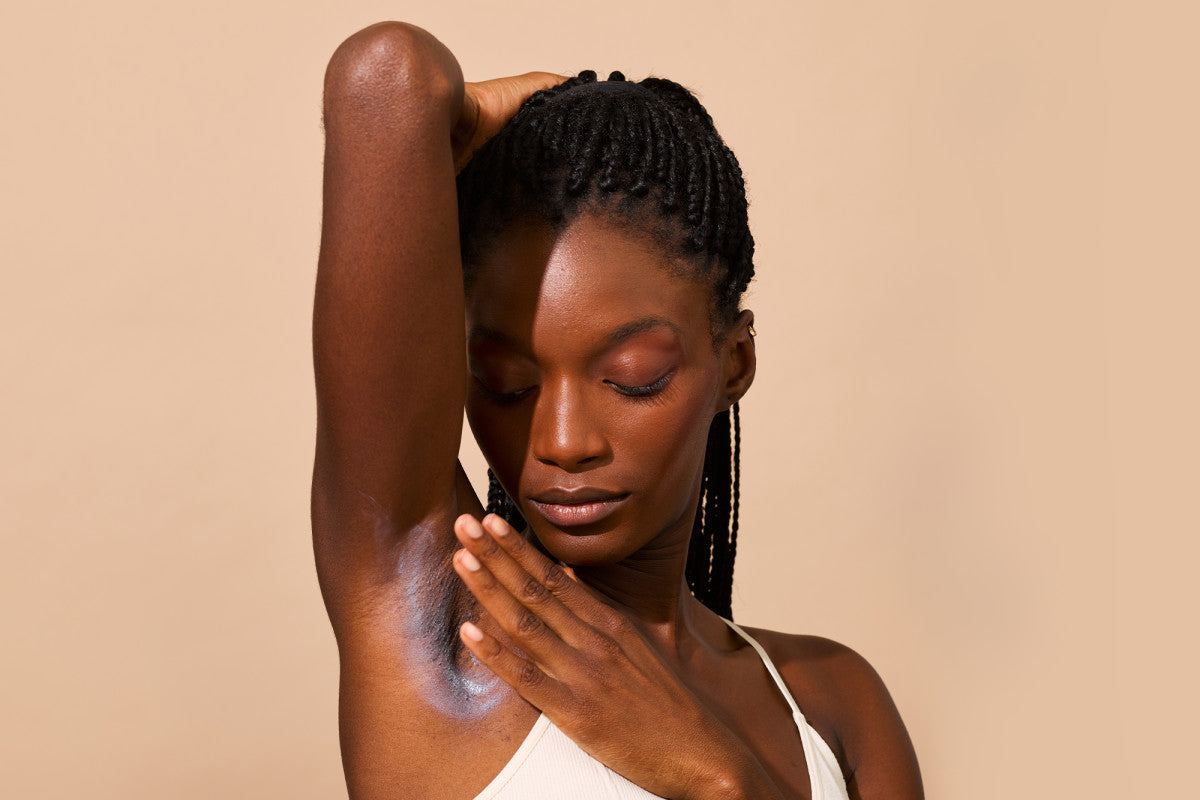
You shave. Everything looks fine. Then a day or two later, there are bumps. Maybe some redness. Maybe a dull ache when you apply deodorant. And over time, if this cycle has been repeating itself for years, you might also notice that the skin in that zone has gradually gotten darker.
This is not bad luck. It is not just "how your skin is." It is a predictable, biological chain reaction — one that starts with how we remove hair and ends with inflammation that the skin keeps a very long memory of.
Understanding that chain is the first step to breaking it. This article covers what actually happens to underarm skin when you shave, why some people are far more prone to ingrown hairs and post-shave darkening than others, and what a smarter underarm care routine actually looks like.
What Happens to Your Skin When You Shave
Shaving is one of the most mechanically aggressive things we do to our skin on a regular basis. A razor blade does not cleanly sever a hair at the surface. It cuts it at an angle, leaving a sharpened tip. That sharpened tip, as the hair begins to regrow, has a pointed edge that can easily pierce the surrounding skin wall rather than growing straight out of the follicle.
The result is an ingrown hair, clinically called pseudofolliculitis, or in more persistent cases pseudofolliculitis barbae. The hair curls back into the skin, the immune system identifies it as a foreign body, and the area becomes inflamed. That inflammation is the origin of the bumps, redness, and tenderness most people know well.
But the consequences do not stop at the bump itself.
Every inflammatory event in the skin signals melanocytes — the cells responsible for producing pigment — to release more melanin into the surrounding tissue. Melanin produced during an inflammatory event can migrate into the deeper dermis, where it is stored in cells called melanophages. These cells can retain that pigment for extended periods, because the removal of dermal melanin is a very slow process. This is why post-inflammatory hyperpigmentation from repeated shaving does not fade quickly. The skin is not overreacting. It is doing exactly what it was designed to do, just in a zone where we keep reactivating the same response week after week.
Who Is Most Affected — and Why
Ingrown hairs after shaving affect people across all skin types and hair textures, but the risk is not distributed equally.
People with naturally tightly coiled or curly hair are significantly more prone to ingrown hairs and the skin complications that follow. When tightly coiled hair is cut at an angle by a razor, the sharpened tip has a much higher tendency to curve back toward the skin rather than growing straight out. According to clinical research published in the American Family Physician, pseudofolliculitis affects between 45 and 85 percent of men of African descent who shave regularly — a prevalence range that underscores how significant hair texture is in this equation. Women with similar hair textures face the same dynamic in the underarm and pubic zones, where shaving is common.
Beyond hair texture, people with darker skin tones face a compounding factor: post-inflammatory hyperpigmentation (PIH) tends to be more pronounced and longer-lasting. This is because more reactive melanocytes, present in higher concentrations in deeper Fitzpatrick skin types, respond more intensely to inflammation signals. An ingrown hair that might leave minimal visible trace in lighter skin can leave lasting discoloration in medium to deep skin tones. Early diagnosis and consistent prevention matter significantly more in these cases, as complications including scarring and persistent hyperpigmentation are harder to reverse once established.
It is also worth noting that people who shave frequently are simply at higher cumulative risk, regardless of skin tone or hair texture. The US military documented this clearly when mandatory clean-shaven policies led to approximately 45 percent of Black service members developing pseudofolliculitis, simply as a function of daily shaving.
The Underarm Is Especially Vulnerable
Not all areas of the body respond to shaving the same way. The underarm is among the most vulnerable for several reasons that compound the standard risks of hair removal.
First, underarm hair does not grow in a single direction. Unlike leg hair, which tends to grow downward in a relatively consistent pattern, underarm hair grows in multiple directions across a small surface area. This makes it genuinely difficult to shave cleanly with the grain — and shaving against the grain dramatically increases the risk of the cut hair tip being angled toward the skin.
Second, the underarm is a zone of constant friction, heat, and moisture. After shaving, the skin barrier is temporarily compromised. In an environment where fabric rubs against the skin with every arm movement, where sweat accumulates, and where deodorant is applied directly to the surface, a disrupted skin barrier is a vulnerable one. Bacteria that would ordinarily be held at the skin surface can penetrate more easily. Irritants in conventional deodorant formulas — alcohol, fragrance, aluminum compounds — come into direct contact with skin that is already in recovery mode.
Third, the underarm skin barrier is inherently weaker than most body skin. The International Hyperhidrosis Society notes that this zone has a higher density of sweat and oil glands, more hair follicles, and greater trans epidermal water loss — all of which mean the stratum corneum (the outer protective layer) is easier to disrupt and slower to recover.
The Shaving to Darkening Pipeline
Most people think about ingrown hairs and dark underarms as separate problems. In reality, one reliably creates the other.
When you shave without adequate preparation, with a dull blade, or against the direction of growth, you create two simultaneous problems. First, the cut hair is shaped in a way that invites it to grow back into the skin. Second, the razor causes micro-abrasions — tiny, often invisible trauma to the skin surface. Each of these micro-abrasions triggers a small inflammatory response. Each inflammatory response stimulates melanin production. Repeated shaving without proper care means repeated micro-trauma, which means a low-grade but continuous cycle of inflammation and pigment deposition that compounds over months and years.
This is the pipeline that turns "I just shave normally" into "my underarms have always been darker than the rest of my skin."
The good news is that this pipeline has a clear point of interruption at every stage.
How to Prevent Ingrown Hairs After Shaving
Prevention requires attention to what happens before, during, and after the razor touches your skin.
Before You Shave
Soften the hair and the skin first. The best time to shave your underarms is at the end of a warm shower, not the beginning. Warm water and steam soften the hair shaft, making it easier to cut cleanly without requiring as much blade pressure. It also relaxes the skin, reducing the tension that makes cut hairs more likely to angle back inward. At least two to three minutes of exposure to warm water is enough to make a meaningful difference.
Exfoliate beforehand. Dead skin cells can clog the opening of the hair follicle. When a growing hair cannot find a clear exit, it grows sideways under the surface instead. Gentle exfoliation one to two times per week — before shaving, not after — removes that buildup and gives the hair a clear path upward. Use something mild: a soft washcloth or a gentle enzyme-based exfoliant. The underarm is not the place for abrasive physical scrubs, which can increase rather than reduce irritation.
Apply a shave cream or gel. Dry shaving is one of the single most reliable ways to cause both irritation and ingrown hairs. Shave cream creates a lubricating layer between the blade and the skin that reduces friction, allows the razor to glide more cleanly, and softens the hair further. If you use a formula with fragrance or alcohol, consider switching — these ingredients are unnecessary for effective shaving and are a common cause of underarm irritation.
During the Shave
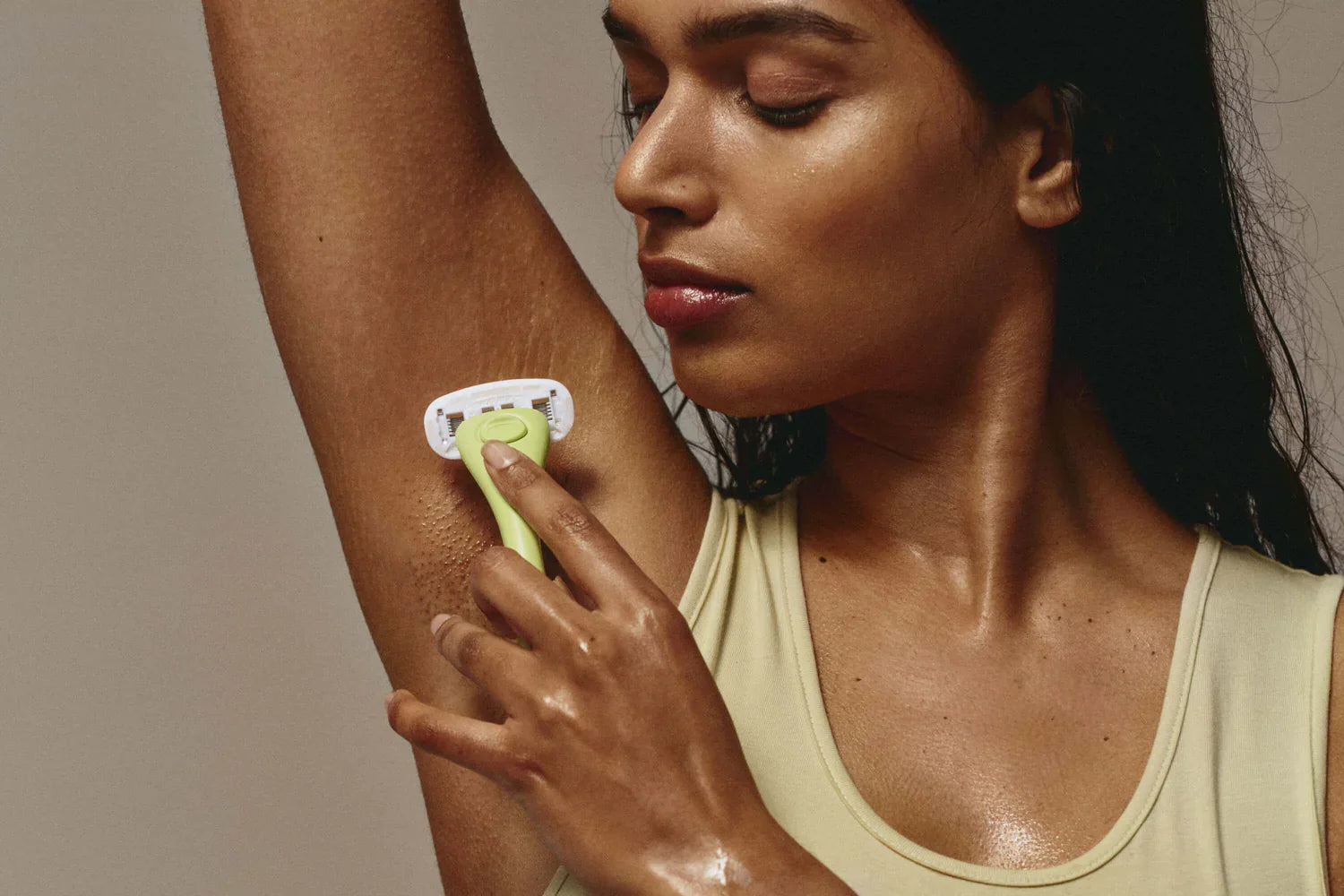
Use a sharp, clean blade. A dull blade drags rather than cuts. It requires more pressure, makes more passes, and creates more friction and micro-trauma than a fresh one. Most dermatologists recommend replacing a razor blade after five to seven uses, though in areas as sensitive as the underarm, erring on the side of fewer uses is wise. A single-blade or two-blade razor is typically less aggressive than a multi-blade design, which cuts the hair slightly below the skin surface — something that feels close in the moment but creates a sharper tip that is more likely to curl back inward.
Shave in the direction of hair growth. As noted above, underarm hair grows in multiple directions, so this requires a moment of attention rather than automatic strokes. Going with the grain rather than against it leaves a slightly less close shave but substantially reduces the risk of ingrown hairs and irritation. For most people, the trade-off is worth it.
Do not apply excessive pressure or make repeated passes. More pressure does not equal a cleaner shave. It equals more friction and more micro-abrasions. One clean pass with a sharp blade in the correct direction is far less damaging than multiple passes trying to get every single hair as short as possible.
After You Shave
Rinse with cool water. Warm water opens the pores. Cool water helps close them again and reduces immediate post-shave redness and inflammation. A brief rinse with cool water after shaving is a simple habit that lowers the skin's inflammatory response.
Apply a soothing, barrier-supporting treatment. This is the step most people skip entirely, and it is the one that makes the biggest difference to long-term underarm skin health. Post-shave skin needs moisture and anti-inflammatory support. Ingredients like aloe vera, panthenol (vitamin B5), and hyaluronic acid help the skin barrier recover faster and reduce the inflammation window during which melanin production is elevated. Applying a serum or treatment with these ingredients after shaving — before deodorant — gives the skin a genuine recovery signal rather than immediately exposing it to more potential irritants.
Give the skin a moment before applying deodorant. Immediately layering deodorant over freshly shaved skin introduces ingredients directly into a compromised barrier. Even a few minutes makes a difference. When you do apply, reach for a formula without alcohol, artificial fragrance, or other unnecessary irritants.
Wear breathable fabrics. The hours after shaving are the most important ones for minimizing friction. Tight synthetic fabrics trap heat and moisture and rub against skin that is already in a sensitive state. Cotton and moisture-wicking materials are meaningfully better choices on shaving days.
When Ingrown Hairs Have Already Happened
Prevention is the goal, but sometimes ingrown hairs are already present. In this case, what you do matters as much as what you avoid.
Do not pick or squeeze. It is tempting, but squeezing an ingrown hair introduces more trauma and bacteria into an already-inflamed follicle. This dramatically increases the likelihood of post-inflammatory hyperpigmentation and, in some cases, scarring.
A warm compress applied to the area for several minutes can help soften the skin and encourage the trapped hair to work its way toward the surface. If the hair is visible just below the skin, a sterile needle or clean tweezers can gently tease it out without pressing into the surrounding tissue.
Topical ingredients with clinical evidence for reducing follicular inflammation include salicylic acid (which also helps prevent follicle-clogging) and benzoyl peroxide. For the darkening left behind after an ingrown hair resolves, the brightening actives covered in our previous post, niacinamide and kojic acid in particular, work through the same post-inflammatory hyperpigmentation pathway that shaving creates.
The Bigger Picture: Shaving Is One Decision in a System
The underarm is a high-demand zone. It is shaved regularly, covered with clothing, exposed to chemical products daily, and kept warm and moist by its own anatomy. No single habit change resolves every problem it faces.
What does work is thinking about underarm care as a system rather than a single step. Shaving preparation prevents ingrown hairs. Post-shave care prevents irritation from becoming lasting darkness. A brightening treatment addresses pigmentation that has already formed. Consistent barrier support keeps the whole environment calmer over time.
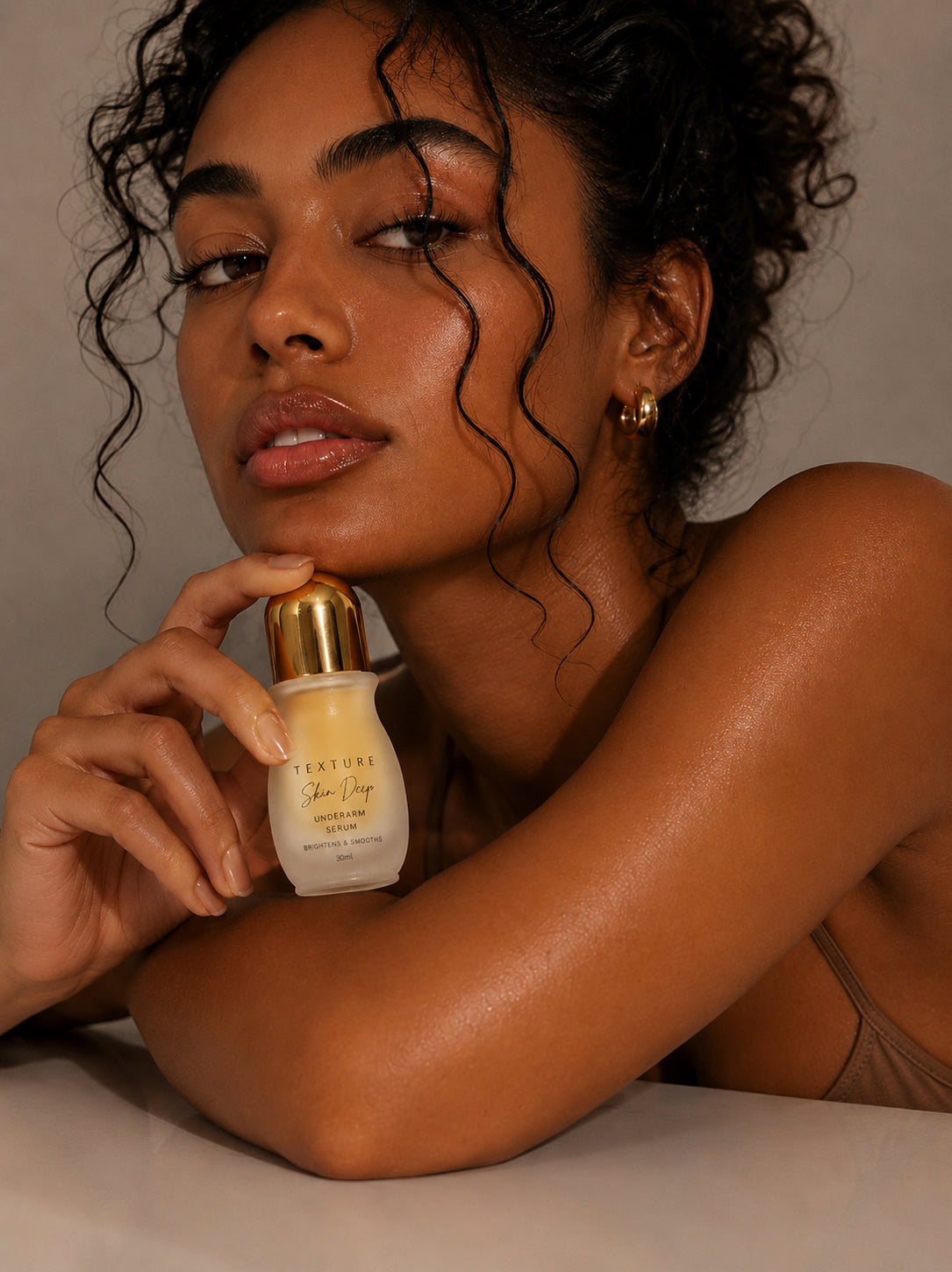
At Texture, this is exactly the philosophy behind our underarm Sérum. It is not a product designed to do one thing in isolation. The niacinamide and kojic acid address existing hyperpigmentation at the melanin-production level. The aloe, cucumber, and hyaluronic acid, calm inflammation and reinforce the skin barrier — the same barrier that gets disrupted every time a razor blade passes over the skin. Used as part of a consistent underarm care routine, it supports the skin before, during, and after the cycle that shaving creates.
The underarms are not an afterthought. They are a zone that responds directly to how much care and attention we give them. Once you start giving them what they actually need, the difference is real and visible.
Skin speaks. We listen.
Quick Reference: The Underarm Shaving Routine
Before: Warm shower for at least two to three minutes. Gentle exfoliation one to two times per week. Shave cream or gel, always.
During: Sharp, clean blade. Shave with the direction of growth. No excess pressure. One to two passes maximum.
After: Cool water rinse. Soothing treatment serum — aloe, panthenol, hyaluronic acid, brightening actives. Wait a few minutes before deodorant. Breathable fabrics for the rest of the day.
Between shaves: Consistent use of a nourishing underarm serum to keep the barrier supported and any existing hyperpigmentation actively fading.