Cart
0
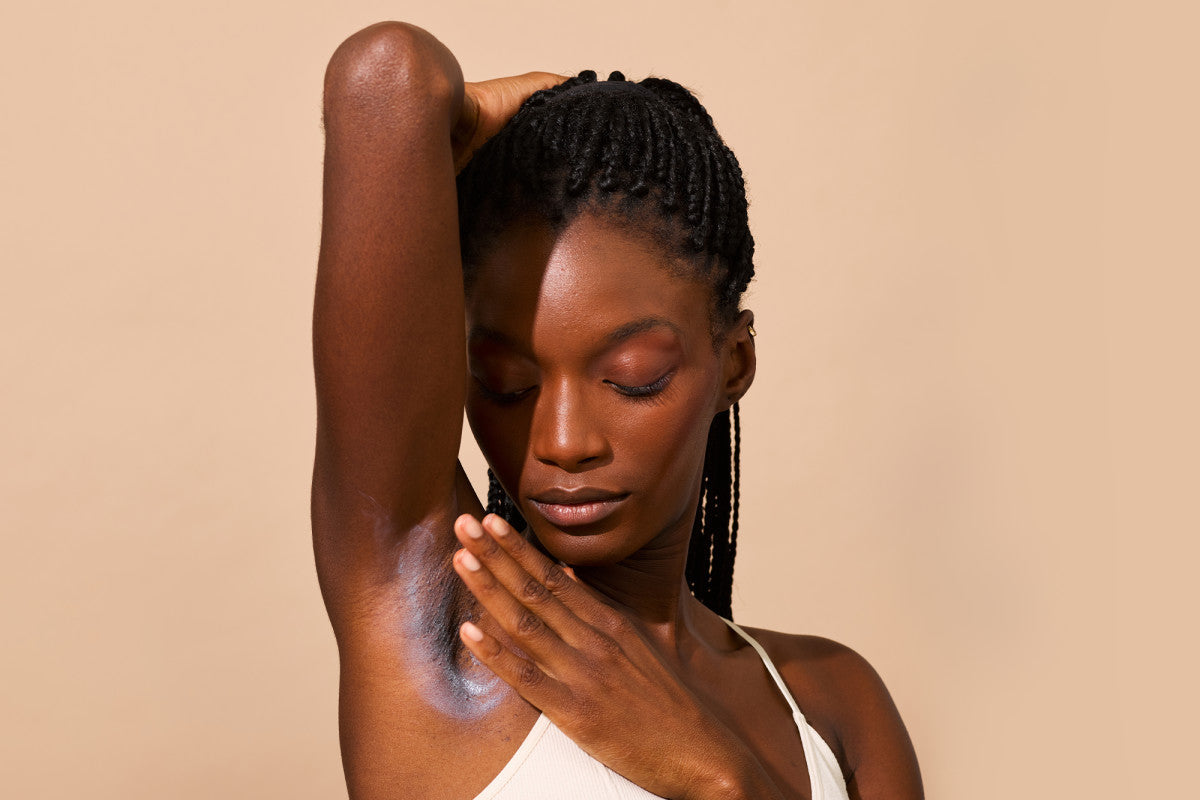
You moisturize your face. You exfoliate your body. You treat your neck like the extension of your face it is. But when was the last time you actually cared for your underarms?
For most people, the answer is never. (beyond soap and deodorant).
And we get it. Underarm care isn't exactly a topic that makes it onto beauty mood boards. But the skin under your arms is some of the most biologically complex skin on your body, and it's also some of the most ignored. The result? Darkening, irritation, rough texture, and a cycle of skin stress that most people just accept as normal.
This is your complete guide to underarm skin care: what's actually happening beneath the surface, why dark underarms (axillary hyperpigmentation) occur, and what a real underarm care routine looks like.
What Makes Underarm Skin Different
Before we talk about care, we need to talk about anatomy because the underarm isn't just "skin like everywhere else." It's a distinct microenvironment.
A Concentration of Glands Unlike Anywhere Else
The human body contains between 2 and 4 million sweat glands. The underarm houses a unique combination of all three types:
- Eccrine glands — present throughout the body, these produce watery sweat primarily for thermoregulation. They're densely concentrated in the underarm.
- Apocrine glands — found almost exclusively in the axillary and anogenital regions, these produce a thicker, protein-rich secretion. When apocrine sweat meets the skin's surface bacteria, it produces the characteristic body odor most people know from this area.
- Apoeccrine glands — hybrid glands found specifically in the underarms, particularly in individuals with hyperhidrosis. These glands can produce nearly ten times as much sweat as standard eccrine glands.
The result is a zone of perpetual moisture, heat, and bacterial activity that no other body zone has to contend with quite the same way.
A Weaker Skin Barrier
The underarm skin is softer, thinner, and more prone to irritation than most body skin. The International Hyperhidrosis Society notes that underarms have more oil and sweat glands, more hair follicles, and higher transepidermal water loss — all of which make the skin barrier here relatively weaker and more susceptible to friction, chemical irritants, and pigmentation response.
In other words: your underarm skin is already working harder than most. Without proper support, it shows.
Dark Underarms: What's Really Happening
Dark underarms — clinically referred to as axillary hyperpigmentation — are one of the most common skin concerns worldwide, yet one of the least discussed. According to a large-scale global study published in JDDG: Journal der Deutschen Dermatologischen Gesellschaft involving over 50,000 participants, the worldwide prevalence of hyperpigmentation disorders is 10.6%, with significantly higher rates in Africa (13.7%) and Asia (12.2%).
Crucially, hyperpigmentation is not just cosmetic. The same research found that quality of life, social life, and psychological wellbeing are all meaningfully impacted by skin discoloration — including in the underarm zone.
The Root Causes of Underarm Darkening
Dark underarms are rarely one thing. They're usually the result of a cascade:
1. Post-Inflammatory Hyperpigmentation (PIH) This is the most common driver of underarm darkening in otherwise healthy adults. When the skin is inflamed or irritated from shaving, friction, harsh deodorants, or tight clothing — it signals melanocytes (the cells responsible for producing pigment) to produce more melanin. That excess melanin deposits into the surrounding tissue, leaving behind darkness long after the irritation has passed. According to Medscape's clinical reference on PIH, this condition is among the most prevalent dermatologic complaints globally, with higher incidence in people with Fitzpatrick skin types IV through VI (medium to deep skin tones).
2. Friction Every time fabric rubs against underarm skin from tight sleeves, activewear, even daily arm movement, the skin sustains micro-trauma. Repeated micro-trauma = repeated inflammation = repeated melanin response. Friction is one of the quietest and most consistent contributors to underarm darkening.
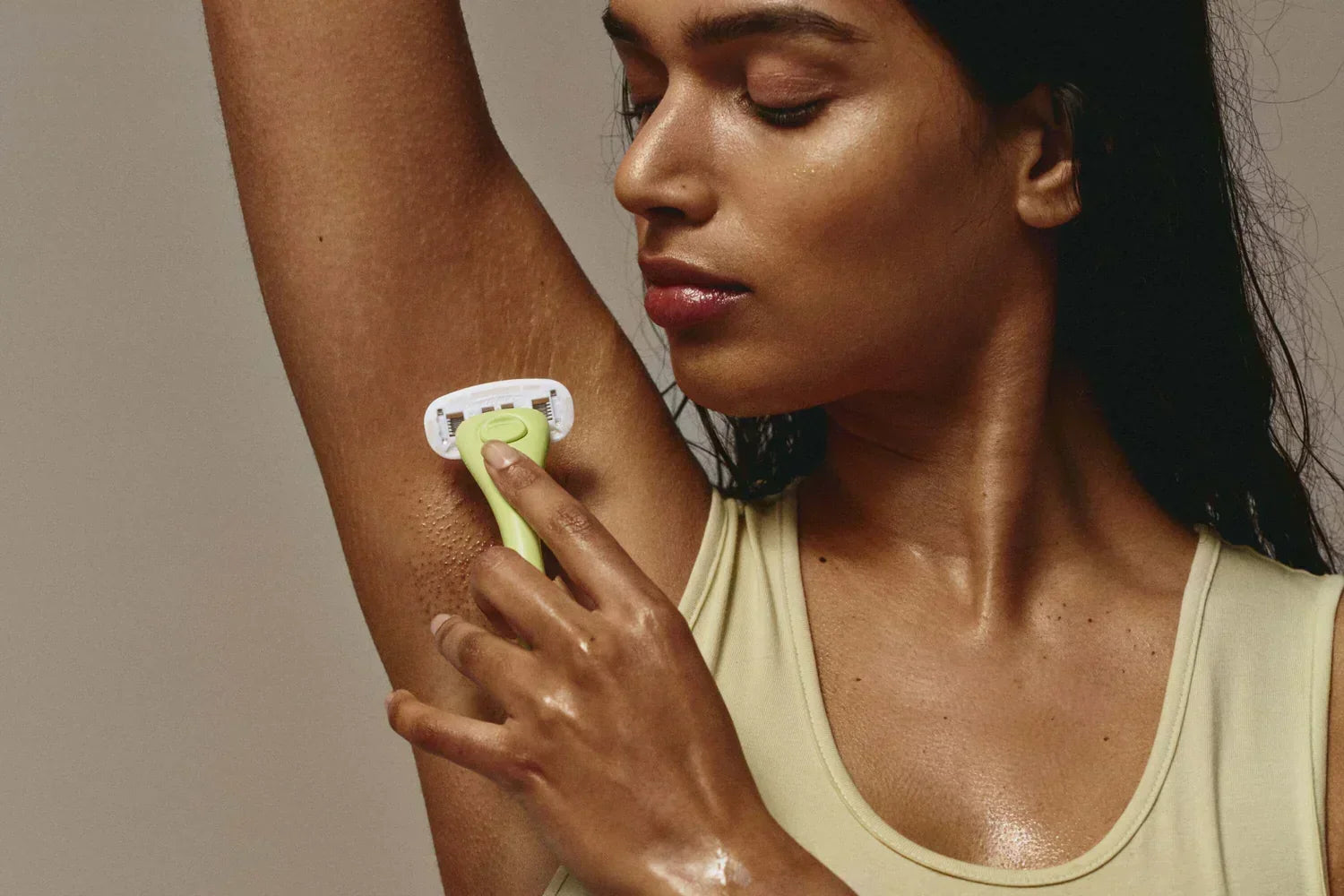
3. Hair Removal Practices Shaving, waxing, and threading can all trigger pigment changes. When the skin's pigment cells are stimulated by repeated hair removal trauma, they can produce melanin faster than the skin can shed it. The result is a gradual darkening that many attribute to the hair itself, when the real culprit is the removal process.
4. Conventional Deodorant and Antiperspirant Ingredients Many conventional deodorant formulas contain aluminum compounds, fragrance, alcohol, and other ingredients that can irritate the underarm's already-sensitive barrier. Repeated exposure to chemical irritants in this zone primes the skin for inflammation-driven darkening.
5. Moisture and Maceration Persistent moisture softens and weakens the stratum corneum which is the skin's outermost protective layer. When the skin barrier is compromised, it becomes far more reactive to friction and chemical exposure, entering a cycle where normal daily activities continually re-trigger irritation and pigment response.
6. Hormonal Shifts Hormonal changes during puberty, pregnancy, and menopause can alter melanin production throughout the body, including in the underarms. Conditions like PCOS and insulin resistance are also associated with axillary darkening, sometimes presenting as a form of acanthosis nigricans, a velvety, darker discoloration in skin folds.
Why Ignoring Underarm Care Is Costing You
We treat face skin like precious infrastructure. Yet the skin under our arms which is equally reactive, equally emotional in how it responds to stress, and equally capable of signaling systemic imbalance, gets forgotten entirely.
Here's what that neglect can lead to:
- Worsening hyperpigmentation that becomes harder to address the longer the cycle continues
- Persistent dryness and rough texture from the absence of any moisturizing support
- Increased susceptibility to irritation as the skin barrier weakens over time
- A cycle of inflammation driven by the very products meant to manage sweat and odor
The skin under your arms is not low-maintenance. It just hasn't had the right routine, until now.