
Cart
0
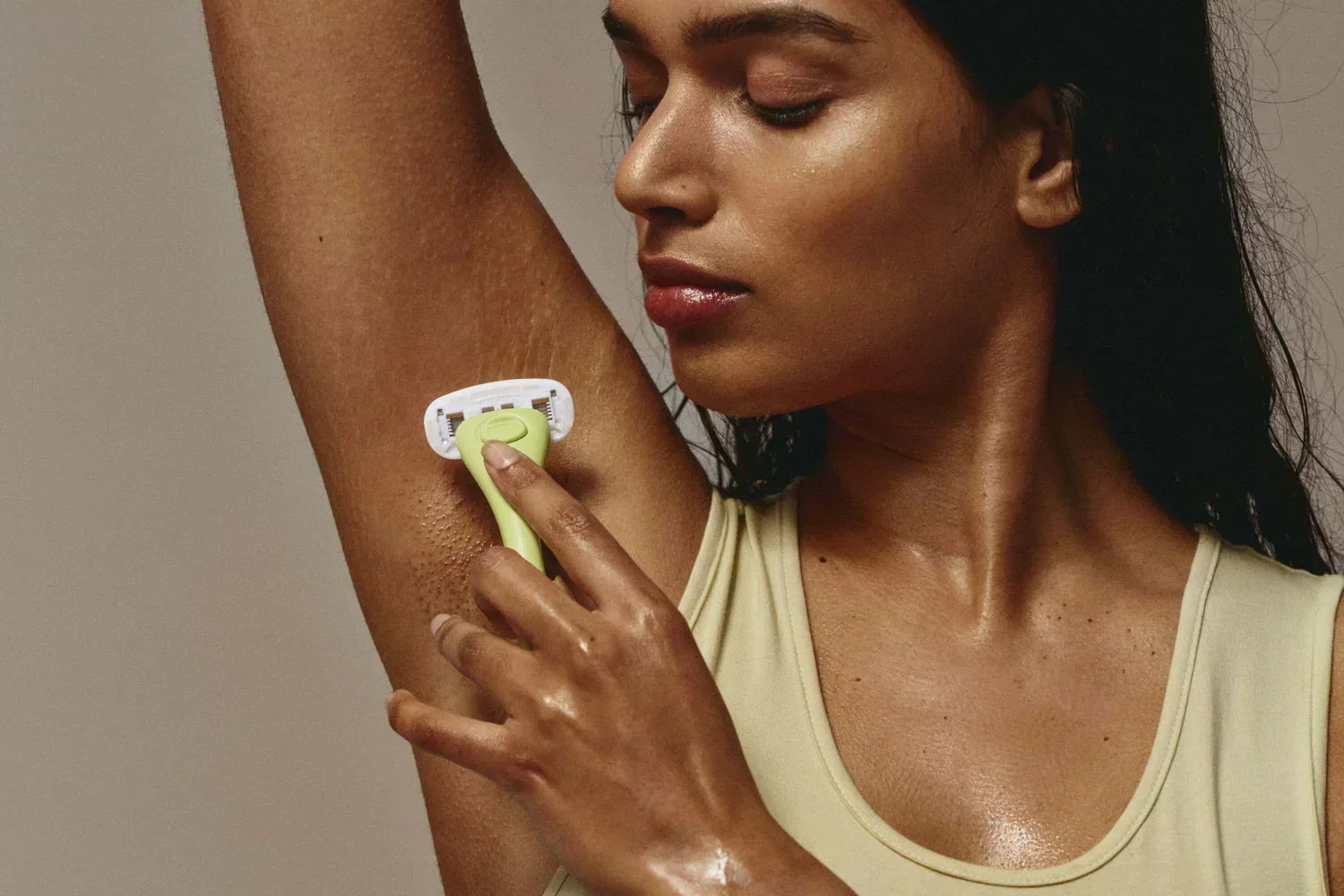
You shave your underarms and everything looks fine.
Then a day or two later, bumps appear. The skin may feel tender, itchy or irritated, and some bumps can eventually leave darker marks behind.
Underarm ingrown hairs and razor bumps are common, particularly when shaving cuts hair very close to the skin or irritates the surrounding area.
The good news is that changing how you prepare, shave and care for the skin afterwards can help reduce the likelihood of them developing.
Why Do You Get Ingrown Hairs Under Your Arms?
An ingrown hair develops when a cut hair grows back into or underneath the surrounding skin instead of growing normally out of the follicle.
This is more likely to happen when hair is curly or coarse because the growing hair can curve naturally back toward the skin.
Shaving can increase the likelihood because it cuts the hair short, sometimes leaving a sharp tip that can re-enter the skin as it grows.
The surrounding skin can then become inflamed, creating the raised bump commonly associated with an ingrown hair.
People with curly or tightly coiled hair may experience razor bumps more frequently because of the way the hair grows. Shaving technique is also an important factor in reducing their occurrence.
For a broader look at different types of underarm bumps, see Why Do I Get Underarm Bumps? Causes, Prevention and Skincare.
Razor Burn vs Razor Bumps
Razor burn and razor bumps are related to shaving, but they are not exactly the same thing.
Razor burn is irritation caused by the shaving process itself. The skin may feel red, sore, itchy or sensitive soon after shaving.
Razor bumps typically develop as cut hairs begin growing back into the skin.
You can experience both at the same time.
Reducing unnecessary friction during shaving can therefore help with immediate irritation as well as the bumps that may appear later.
Why Are Underarms Prone to Shaving Irritation?
Underarms can be particularly challenging to shave.
Hair in the area often grows in several different directions, making it harder to shave consistently with the direction of growth.
The skin also experiences regular friction from arm movement and clothing, together with sweat, deodorant and repeated hair removal.
Freshly shaved skin may therefore feel more sensitive than usual.
That does not mean you need a complicated routine. It means shaving technique matters.
For a broader approach to caring for the area, see our underarm skincare routine guide.
If rubbing and clothing are regular triggers, see How Friction Affects Underarm Skin.
How to Prevent Ingrown Hairs Before You Shave

What happens before the razor touches your skin can make a significant difference.
Soften the Hair First
Shaving at the end of a warm shower can help soften both the hair and skin.
Wetting the hair and skin before shaving can make the hair easier to cut with less pressure.
There is no need to aggressively scrub the area first.
The aim is simply to prepare the hair so the razor can move across the skin more easily.
Use a Shaving Cream or Gel
Avoid dry shaving where possible.
A shaving cream or gel creates lubrication between the blade and the skin, reducing friction as the razor moves across the area.
If your underarms are particularly sensitive, choose something designed for sensitive skin and stop using products that consistently sting or cause irritation.
For more on managing reactivity in the area, see How to Care for Sensitive Underarm Skin.
Be Careful With Exfoliation
Gentle exfoliation can help prevent dead skin buildup around the follicle, but underarms do not need aggressive exfoliation immediately before every shave.
How frequently you exfoliate should depend on your skin, the products you use and how easily the area becomes irritated.
Avoid exfoliating skin that is already sore or damaged.
For more guidance on frequency, see How Often Should You Exfoliate Your Underarms?.
How to Shave Your Underarms Without Razor Bumps
Use a Clean, Sharp Razor
A blunt razor can drag across the skin and encourage you to apply more pressure or make repeated passes.
Replace razor blades regularly rather than continuing to use a blade that feels blunt or begins to drag.
Store your razor somewhere it can dry properly between uses rather than leaving it sitting wet in the shower.
Pay Attention to Hair Growth Direction
Underarm hair may grow in several directions.
Before shaving, take a moment to see how the hair grows across different parts of the underarm.
Where possible, shave in the direction of hair growth rather than repeatedly shaving against it.
Following the direction of growth can help reduce unnecessary irritation and the likelihood of razor bumps.
Use Light Pressure
Pressing harder does not necessarily produce a better shave.
It usually means more contact and friction between the blade and your skin.
Let a sharp razor and shaving product do most of the work.
Avoid Repeated Passes
Going over the same patch of skin again and again increases friction.
Try to use controlled strokes and avoid repeatedly chasing an extremely close shave if doing so regularly leaves your skin irritated.
What Should You Do After Shaving Your Underarms?
Post shave care should focus on keeping recently shaved skin comfortable.
Rinse the Area Gently
Rinse away remaining shaving product and loose hair without scrubbing.
Pat the skin dry rather than rubbing it vigorously with a towel.
Give the Skin Time to Settle
You do not need to immediately layer several products onto freshly shaved skin.
If your underarms feel sensitive after shaving, give them time to settle before applying active skincare or deodorant.
Texture recommends waiting until the skin feels calm and dry before applying Le Sérum Underarm Serum after shaving.
For more detailed guidance around serum and hair removal, see Can You Use Underarm Serum After Shaving or Waxing?.
Use Skincare That Supports Comfort
Recently shaved skin may benefit from products designed to maintain moisture and comfort.
Le Sérum Underarm Serum contains aloe and cucumber to help maintain moisture and comfort, together with niacinamide and gentle exfoliating acids to support tone and texture.
If your skin feels particularly irritated, allow it to recover rather than assuming it needs more active treatment.
For more information about where this type of product fits into your routine, see What Is an Underarm Serum? Benefits, Uses and How It Works.
Reduce Friction Where Possible
Tight clothing can rub repeatedly against recently shaved skin.
Where practical, choose clothing that feels comfortable against the underarm area, particularly if shaving has left the skin sensitive.
Reducing unnecessary friction can help keep recently shaved skin more comfortable.
What Should You Do if You Already Have an Ingrown Hair?
If an ingrown hair has already developed, avoid squeezing, picking or digging into it.
That can create additional skin trauma and may make irritation or subsequent discoloration more noticeable.
A warm compress may help soften the area and make it more comfortable.
Where possible, temporarily reducing the hair removal practice that triggered the irritation can also give the skin time to recover.
Allow the hair time to grow out naturally rather than trying to cut or extract it from beneath the skin yourself.
If bumps are persistent, painful, filled with pus, repeatedly recur or leave significant scarring, speak with a dermatologist or other qualified healthcare professional.
Why Can Ingrown Hairs Leave Dark Marks?
Inflammation caused by an ingrown hair or razor bump can sometimes leave behind a darker mark after the bump itself has resolved.
This is known as post inflammatory hyperpigmentation.
Picking at bumps or repeatedly irritating the same area can create further inflammation, potentially making the resulting marks more noticeable.
This is why prevention matters for both texture and tone.
If pigmentation is your main concern, see Dark Underarms: Causes and How to Care for Uneven Tone.
For more tailored guidance around pigmentation and irritation in deeper skin tones, see Underarm Skincare for Melanin-Rich Skin.
Can Underarm Serum Prevent Ingrown Hairs?
It is better not to position an underarm serum as something that guarantees prevention of ingrown hairs.
Ingrown hairs are influenced by hair texture, shaving technique, hair removal frequency and how the hair grows back.
What targeted skincare can do is support the surrounding skin.
Le Sérum Underarm Serum contains gentle exfoliating acids designed to smooth texture and refine the appearance of bumps, alongside ingredients that support skin comfort.
That makes serum one part of an underarm routine, not a replacement for good shaving technique.
How Often Should You Shave Your Underarms?
There is no single frequency that works for everyone.
How often you shave depends on how quickly your hair grows, the result you prefer and how your skin responds.
If your skin regularly develops irritation after shaving, allowing more recovery time between sessions may be useful.
The bigger priority is how you shave each time.
Preparing the hair properly, using a sharp blade, reducing friction and avoiding repeated passes can matter more than following a fixed shaving schedule.
A Simple Underarm Shaving Routine
Before Shaving
- Allow warm water to soften the hair
- Apply a suitable shaving cream or gel
- Make sure your razor is clean and sharp
- Avoid shaving skin that is already inflamed or damaged
During Shaving
- Follow the direction of hair growth where possible
- Use light pressure
- Use controlled strokes
- Avoid repeatedly passing over the same area
After Shaving
- Rinse the area gently
- Pat the skin dry
- Give sensitive skin time to settle
- Apply appropriate skincare once the skin feels calm
- Reduce unnecessary friction from tight clothing
For a wider routine that includes cleansing, exfoliation, targeted skincare and deodorant, see Underarm Skincare 101: How to Build an Underarm Care Routine.
When Are Underarm Bumps More Than Ingrown Hairs?
Not every underarm bump is caused by shaving.
Folliculitis, cysts and other skin conditions can also cause bumps in the underarm area. Recurrent painful lumps, drainage or scarring should not automatically be treated as ordinary ingrown hairs.
Seek medical advice if you develop painful or persistent lumps, signs of infection, significant swelling or recurring bumps that do not improve.
For a broader guide to the possible causes, see Why Do I Get Underarm Bumps? Causes, Prevention and Skincare.
A Smarter Approach to Shaving Underarm Skin
Preventing underarm ingrown hairs is less about finding one miracle product and more about reducing the conditions that encourage irritation.
Soften the hair before shaving, use enough lubrication, keep your razor sharp, follow the direction of hair growth where possible and avoid unnecessary pressure.
Then give the skin appropriate care afterwards.
When shaving technique and skincare work together, you give underarm skin a better chance to remain smooth, comfortable and less prone to the cycle of irritation, bumps and dark marks.


